














A Jurisprudential and Legal Analysis of the Final Breath of Life in Homicide
The present study examines, from a jurisprudential and legal perspective, the concept of the “final breath of life” (unstable life) in cases of homicide. The final breath of life constitutes an intermediate condition in which an individual stands on the threshold of death; limited vital signs (such as a weak heartbeat, respiration dependent on mechanical ventilation, or minimal basic biological activity) persist, yet a return to independent and stable life (stable life) is practically impossible. The central question of this research is whether terminating this condition (for example, by withdrawing life-sustaining support) may be regarded as constituting the requisite physical conduct necessary to satisfy the material element of homicide (the deprivation of the life of a living human being possessing full inviolable life), or not. Using an interpretive–analytical method and drawing upon the sources of Imāmī jurisprudence, legal doctrine, and medical science, the findings indicate that in Imāmī jurisprudence the final breath of life is often equated with the separation of the soul from the body, and the individual in such a condition is regarded as legally equivalent to a deceased person; accordingly, acts committed against such a person are considered offenses against a corpse rather than homicide. Article 372 of the Islamic Penal Code (enacted in 2013) explicitly reflects this jurisprudential distinction within Iranian criminal law and allocates responsibility among the involved parties: the first person (the one who creates the condition of unstable life, such as by inflicting the initial injury) is subject to qiṣāṣ (retaliation in kind) or payment of diyah (blood money) for the inflicted injury, while the second person (the one who terminates the final breath of life, such as by withdrawing support without causing a new direct injury) is deemed to have committed an offense against a corpse. Consequently, such conduct generally does not fulfill the material element of homicide or may lack criminal characterization altogether (within the framework of forensic medical determination and the consent of the legal guardian). The central role of Imāmī jurisprudence in defining death on the basis of the separation of the soul, the role of medical science in the precise diagnosis of brain death and unstable life, judicial interpretation of Article 372, and the challenges arising from legislative gaps concerning the precise boundary between life and death constitute key aspects of this research. The study concludes that the jurisprudential and legal distinction between stable life and the final breath of life forms the principal basis for analyzing criminal liability in homicide, and that legislative reconsideration is necessary in order to harmonize the foundations of Imāmī jurisprudence, the findings of modern medical science, and criminal law, so as to eliminate judicial ambiguities and ensure criminal justice.
A Comparative Analysis of the Number of Spiritual Stations and Waystations of Mystics from the Perspectives of Imam Khomeini and Qushayri
This study aims to comparatively analyze the number, structure, and conceptual logic of mystical stations and waystations in the thought of Imam Khomeini and Qushayri. The central problem is that the difference between these two mystics in presenting spiritual stations is not merely numerical, but rooted in their epistemological, anthropological, spiritual, and teleological foundations. The research adopts a descriptive-analytical method based on a comparative reading of the major works of both thinkers. The findings indicate that Qushayri, within the framework of classical Sufism, explains stations mainly as a set of virtues, disciplines, and spiritual states, emphasizing repentance, scrupulousness, asceticism, patience, trust, satisfaction, love, knowledge, and sincere servitude. By contrast, Imam Khomeini interprets stations and waystations within the horizon of Shi‘i mysticism, guardianship, monotheism, the removal of dark and luminous veils, presence of heart, the inner meaning of worship, and ascent through the divine names. Thus, in Qushayri’s view, the plurality of stations primarily has an ethical and pedagogical function, whereas in Imam Khomeini’s thought, the waystations of the path acquire meaning in relation to the degrees of monotheism and the realization of servitude. The study concludes that Qushayri is closer to a detailed enumeration of stations and the formation of a pedagogical map for the seeker, while Imam Khomeini gives greater attention to the ontological and monotheistic depth of the waystations. Accordingly, the number of stations in Islamic mysticism is not fixed or merely numerical, but reflects each mystic’s understanding of the human being, religious law, spiritual path, guardianship, and the final goal of mystical journeying.
A Comparative Analysis of the Application of Circumstantial Evidence in the Criminal Systems of Iran and Egypt and Islamic Jurisprudence
Circumstantial evidence, as an important instrument of indirect proof in criminal proceedings, plays a fundamental role in discovering truth, establishing judicial knowledge, and achieving criminal justice. The transformation of criminal behavior and the limitations of traditional evidentiary mechanisms have increased the importance of material, moral, scientific, and electronic indications in contemporary legal systems. The present study aimed to comparatively analyze the application of circumstantial evidence in the criminal systems of Iran and Egypt and Islamic jurisprudence. Using a descriptive-analytical method and a comparative approach, this study examined the jurisprudential and legal foundations of circumstantial evidence, its position in criminal proof, and the limitations of its application. The findings indicated that, in Islamic jurisprudence, the validity of circumstantial evidence depends on the type of crime, its degree of certainty, and its compatibility with principles such as the presumption of innocence and the rule of avoiding hudud punishments in doubtful cases. In hudud crimes, the use of circumstantial evidence is more restricted due to the necessity of caution and prevention of unjust convictions, whereas in ta’zir crimes, it has broader applicability. In the Iranian criminal system, circumstantial evidence mainly obtains validity through the formation of judicial knowledge and must be based on objective, assessable, and case-related evidence. Conversely, the Egyptian criminal system, through its emphasis on judicial persuasion, provides greater flexibility in evaluating circumstantial evidence, although judicial decisions must remain reasoned and evidence-based. The comparison demonstrates that the main difference between the two systems is not the acceptance of circumstantial evidence itself but the theoretical foundation and method of applying it. Ultimately, the effective use of circumstantial evidence requires a balance between truth discovery, modern evidentiary developments, and protection of defendants’ rights.
Designing a Model of Organizational Justice Based on Islamic Teachings (the Qur’an and Nahj al-Balagha) in Public Organizations
The main objective of this article is to design a model of organizational justice based on Islamic teachings (the Qur’an and Nahj al-Balagha) in public organizations. The research method is mixed (qualitative–quantitative). In conducting this study, in addition to documentary analysis, thematic analysis using MAXQDA 14 software was employed to identify the factors influencing organizational justice based on Islamic teachings. The statistical population in the qualitative phase included all academic experts in the fields of public management and human resource management, as well as seminary faculty members with more than 15 years of work experience who were familiar with the concept of organizational justice based on Islamic teachings; a total of 14 interviews were conducted until theoretical saturation was achieved. Based on semi-structured interviews, 8 dimensions, 35 components, and 94 indicators were extracted. In the quantitative phase, a descriptive–survey method was applied. The statistical population consisted of all managers and experts in public organizations in the city of Deyr, from which 187 individuals were selected using Cochran’s sampling method. The results indicated that the dimension of interactional justice (with a coefficient of 0.960) had the highest importance, while the dimension of social justice (with a coefficient of 0.852) had the lowest importance. Ultimately, the final model was presented and validated with four main dimensions, including philosophy and objectives, theoretical foundations, evaluation system, and executive mechanisms.
The Manifestation of Religious Knowledge in the Mourning Rituals of Muharram: A Comparative Analysis of the Periods of Shah Abbas I of the Safavid Dynasty and Naser al-Din Shah of the Qajar Dynasty
The present study was conducted with the aim of comparatively analyzing the manifestation of religious knowledge in the mourning rituals of Muharram during two historical periods: the reign of Shah Abbas I of the Safavid dynasty and the reign of Naser al-Din Shah of the Qajar dynasty. This study is organized based on a historical and comparative approach and employs a descriptive-analytical method. The required data were collected through the examination of library sources, historical documents, travelogues, and historical texts. The findings indicate that mourning rituals in both historical periods were not merely individual practices; rather, they functioned as effective instruments for strengthening Shiite identity, creating social cohesion, reproducing religious knowledge, and establishing connections with structures of political power. Although the active presence of rulers, martyrdom-narrative recitation, elegiac preaching, and the use of symbols such as ritual standards and ceremonial insignia were among the common elements of both periods, fundamental differences can also be observed. In the Safavid era, emphasis was placed on elegiac preaching and content grounded in jurisprudential texts and authoritative narrations, whereas the Qajar period, with the expansion of passion plays, dramatic mourning performances, and the incorporation of popular and artistic elements, assumed a more theatrical and complex character. The results suggest that the semantic and epistemic core of these rituals remained stable and enduring over time, while only their performative form and content changed and adapted in accordance with the historical, cultural, and social transformations of each era.
Examining the Ethical Values of Contentment (Riḍā), Trust (Tawakkul), and Entrustment (Tafwīḍ) from the Mystical Perspective of Imam Khomeini
This applied study examines the ethical values of contentment (riḍā), trust (tawakkul), and entrustment (tafwīḍ) from the mystical perspective of Imam Khomeini. Understanding and realizing mystical stations are contingent upon understanding and realizing the theoretical foundations of mysticism, an issue that has received attention in the major works of mystics who explicate the school of Ibn ʿArabī. Imam Khomeini, as a contemporary mystic and commentator of this school, likewise employs certain ontological and anthropological theoretical foundations in explicating mystical stations. This research adopts a descriptive–analytical method and is conducted through library research, drawing on books and scholarly articles. First, the concepts of the stations of spiritual wayfaring were examined and studied in Imam Khomeini’s major works related to practical mysticism; subsequently, the position of these stations within mystical states and ranks was analyzed, and finally, their degrees were interpreted and justified. The findings indicate that mystical stations differ from one another in terms of depth and richness; moreover, the theoretical foundations of mysticism are interrelated and intertwined. An examination of the explanations provided by the great mystic Imam Khomeini regarding the stations of wayfaring demonstrates the influence and necessity of theoretical foundations for explicating mystical stations. It became clear that the realization of each station of wayfaring depends on a combination of several theoretical foundations, which themselves are interconnected and inseparable. In fact, both the rationale for the necessity of realizing a given station for the spiritual seeker and the explanation of how that station is realized are made possible on the basis of these very principles and theoretical foundations, as demonstrated in this article. From a broader perspective, the fact that stations of wayfaring can be explicated through theoretical mystical foundations, and that these foundations play an effective role in their realization, points to the existence of a linkage between practical mysticism and theoretical mysticism. Imam Khomeini, as a contemporary mystic and commentator, has paid close attention in his philosophical–mystical works to the interconnection and mutual influence between practical and theoretical mysticism, and has demonstrated this linkage throughout his mystical discussions of the stations of wayfaring.
Analysis of the Strategies of Islamic Educational Philosophy with a Hermeneutic Approach and Presentation of a Paradigmatic Model
Religious education in Islam is a purposeful process aimed at guiding human beings toward a pure life (ḥayāt ṭayyibah) and nearness to God, grounded in revelatory sources and sound reason. Despite the existence of educational crises in the Islamic world, the development of a systematic model of the strategies and consequences of religious education remains essential. The present study was conducted with the aim of analyzing the strategies of the philosophy of religious education in Islam through a hermeneutic approach and presenting a paradigmatic model. This research is an applied study employing a two-phase qualitative approach (exploratory sequential mixed design). In the first phase, the Holy Qur’an and Ayatollah Javadi Amoli’s Tafsir Tasnim were analyzed using documentary analysis, grounded theory (Strauss and Corbin method), and a hermeneutic approach based on Khosrow Bagheri’s five-step model. In the second phase, the extracted model was validated through the Delphi method with 15 experts, including faculty members holding doctoral degrees in philosophy of education and seminary scholars at Level 4 and above. The central category of “innate monotheistic education” was identified. Causal factors (spiritual heredity), contextual factors (family), intervening factors (school and society), strategies (encouragement and warning, exhortation, guidance, reminder, command and prohibition, and complementary strategies), and consequences (peace of heart, furqan [discernment], guidance, inner illumination, and contentment) were explicated. The paradigmatic model was designed in three layers: philosophical, infrastructural, and operational. The validity of the model was confirmed through a Cronbach’s alpha coefficient above 0.70, a Content Validity Index (CVI) ranging from 0.90 to 0.96, and expert consensus with a mean score above 4.2 out of 5. By integrating theoretical coherence with practical applicability, the proposed model can serve as an operational framework for educational systems in Islamic societies in fostering a generation characterized by faith, commitment, and ḥayāt ṭayyibah.
A Descriptive-Analytical Study of the Theoretical Perspective and Methods of “Negative or Restrictive Education” in Islamic Education
The approach of “negative or restrictive” education, as opposed to “positive” education, represents one of the theoretical foundations of Islamic education. The negative (restrictive) method refers to refraining from the use of coercive and prescriptive techniques, which is considered the only path to the flourishing of human innate talents and capabilities. Restrictive education is presented as the sole natural method in the Qur’an, hadiths, and the perspectives of Islamic philosophers. The primary challenge facing the educational system in our country is the dominance of positive methods that have overshadowed restrictive approaches in education. The continuous influx of educational and pedagogical ideas, plans, and programs in families, schools, and educational institutions has increasingly distanced children from innate education—which is self-based, meaningful, and developmental—and has directed them toward positive education, which is externally based, artificial, and imitative. This divergence leads to misalignment and conflict between the inputs and outputs of the country’s educational system. In this study, the two perspectives—“positive education” and “restrictive education”—are first compared descriptively in terms of theoretical foundations and practical methods and analyzed in detail. Ultimately, the “restrictive education method” is examined as the only “effective and elevating” approach in Islamic education, accompanied by conclusions and essential constructive recommendations. The researcher aims to demonstrate that the application of “restrictive education” and the avoidance of positive education, along with presenting instructional content compatible with the innate nature of students, leads to their intellectual flourishing and positions them on the path of creativity and erudition. Educational institutions must revise curricula and implement restrictive instructional programs and teaching methods to assist students in developing individual and social talents and abilities, thereby fostering their creativity and intellectual refinement.
About the Journal
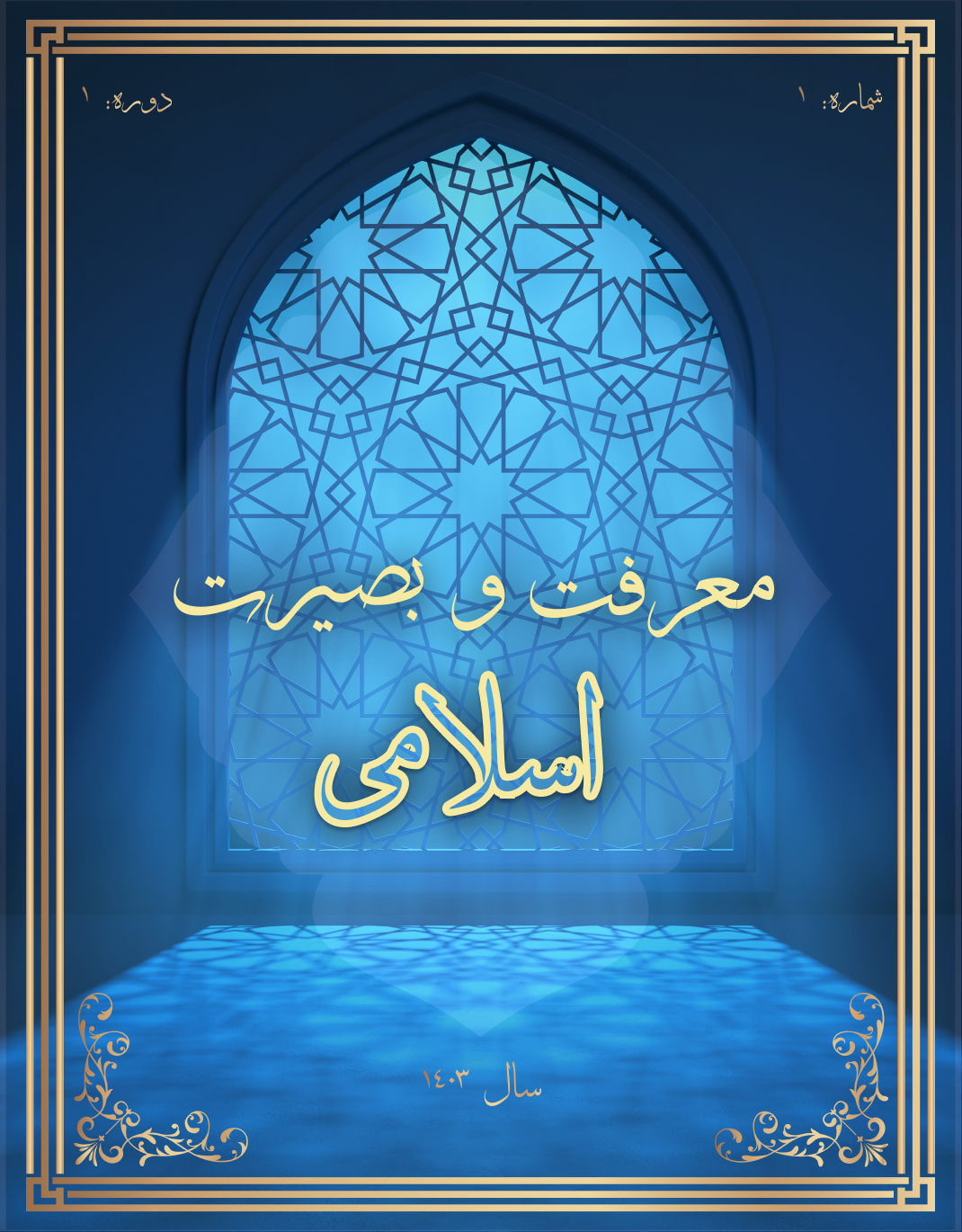
Islamic Knowledge and Insight is a premier, open-access journal dedicated to advancing academic dialogue on Islamic studies, bridging traditional insights with contemporary understandings in diverse fields such as philosophy, jurisprudence, theology, spirituality, ethics, and cultural studies. This journal serves as a platform for scholars, researchers, and thinkers from around the world to publish original research, critical reviews, and insightful commentary that further our understanding of Islamic knowledge and its applications to individual and social well-being.
Published quarterly, Islamic Knowledge and Insight is committed to upholding high standards of scholarly excellence through rigorous peer review and meticulous editorial oversight. Our journal appeals to a global audience, fostering interdisciplinary and intercultural exchanges that enrich both Islamic studies and broader social sciences and humanities.